Back to Projects
SaaS DevelopmentLiveWeb, Desktop
Kickly: AI-Driven MVP Planning & Execution
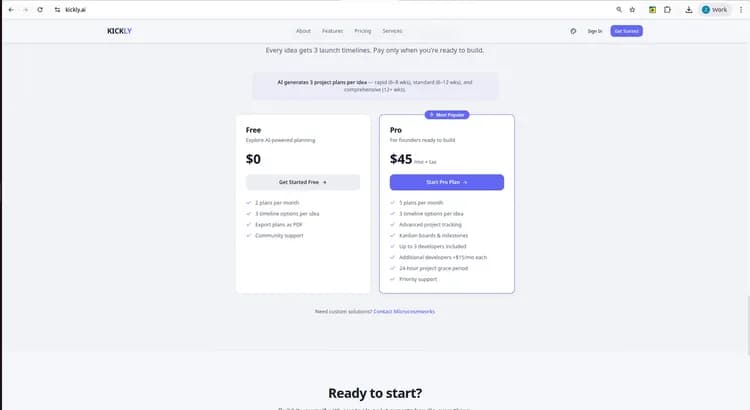
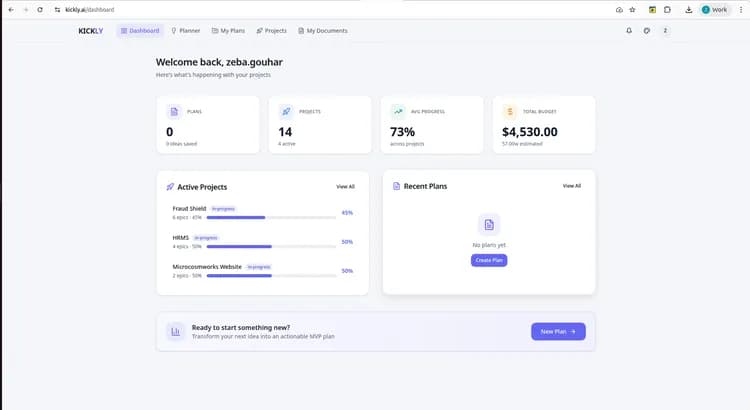
An AI-powered SaaS that turns startup ideas into launchable products — spanning a Next.js Web App, an Electron desktop time-tracking companion, six NestJS microservices, and a Yjs/HocusPocus collaboration server. Combines multi-model AI plan generation (GPT, Claude, Gemini), structured project management, real-time collaborative documents, and end-to-end work tracking.
20+
Technologies
11+
Key Features
Web, Desktop
Platform
Key Features
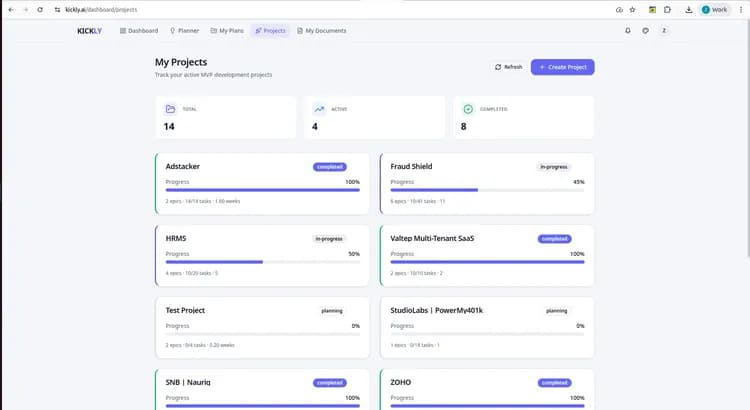
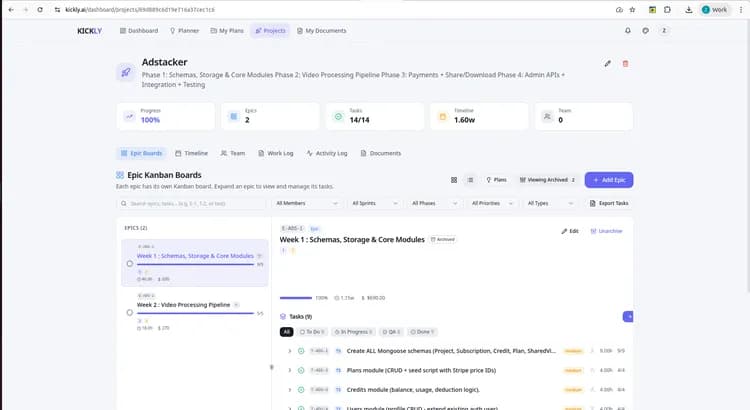
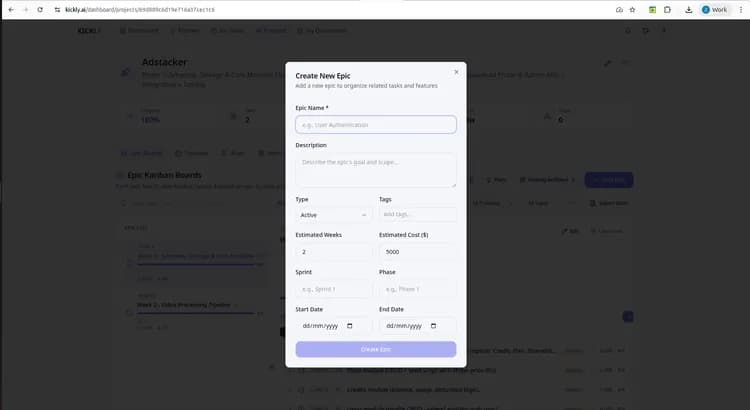
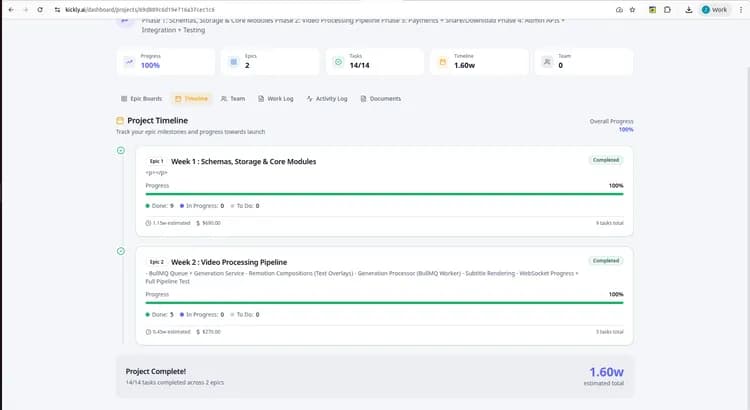
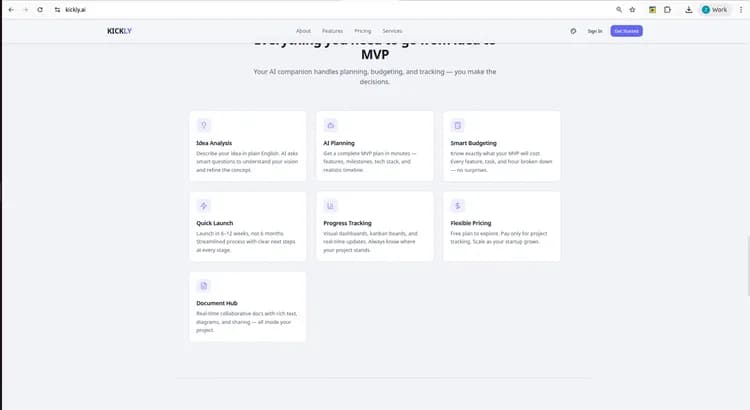
Multi-model AI plan generation (GPT, Claude, Gemini)9 plan variations per idea (3 tiers x 3 versions)Structured epics, tasks, subtasks hierarchy with Kanban boardReal-time collaborative document editing (Yjs CRDT)BlockNote rich text editor with Excalidraw whiteboardMermaid diagrams and PDF viewer in unified workspaceScreen recording and time tracking with idle detectionCross-platform Electron desktop appSubscription billing via RazorpayPasswordless OTP authentication with dual JWTExport to JSON, Markdown, and Bolt Prompt
Development Highlights
Multi-model AI engine with GPT, Claude, and Gemini9 plan variations with tiered batch generationYjs CRDT real-time collaborative editingSix NestJS microservices with domain separationElectron desktop app with auto screen captureRazorpay subscription with full lifecycle managementPasswordless OTP auth with dual JWT
Technology Stack
Next.js 15React 18TypeScriptTailwind CSSshadcn/uiNestJS 11MongoDBMongooseOpenAI APIAnthropic Claude SDKGoogle Gemini SDKYjsHocusPocusBlockNoteExcalidrawElectronRazorpayAWS S3AWS SESSentry
Our Contribution
Full-Stack Platform
Developed the full-stack SaaS platform spanning the Next.js frontend, six NestJS microservices, and a standalone Electron desktop application.
Multi-Model AI Engine
Built the multi-model AI engine supporting OpenAI GPT, Anthropic Claude, and Google Gemini as interchangeable generation backends with fallback resilience.
Tiered Plan Generation
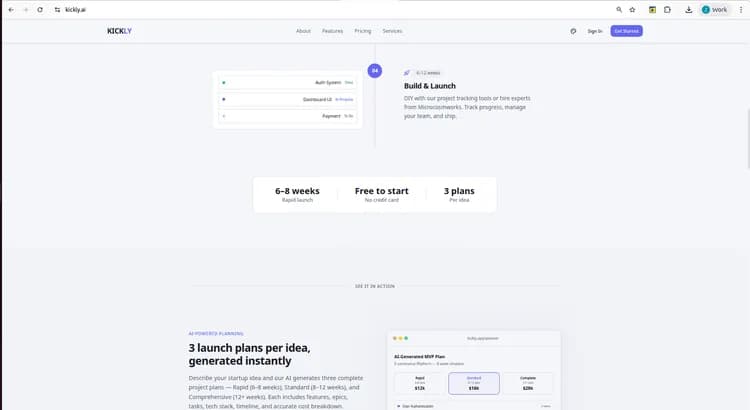
Implemented tiered plan generation producing 9 plan variations (3 tiers x 3 versions) with batch generation and real-time progress tracking.
Collaborative Document Workspace
Designed a real-time collaborative document workspace using Yjs CRDT and HocusPocus WebSocket with live cursor presence and conflict-free merging.
Rich Editor Suite
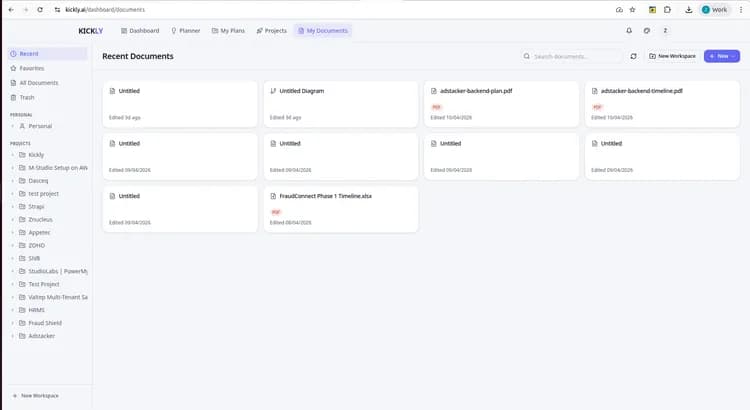
Created a rich document workspace with BlockNote rich text editor, Excalidraw whiteboard, Mermaid diagrams, and PDF viewer in a unified interface.
Work Tracking System
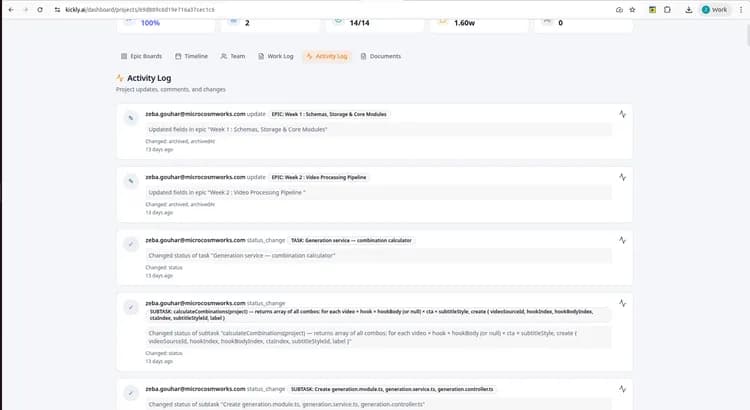
Built a full work tracking system with screen recordings, recording intervals, task-level work logs, weekly timesheets, and time analytics.
Desktop Application
Developed the desktop Electron time-tracking application with automatic screen capture, idle detection, and real-time sync to the platform backend.
Microservices Architecture
Architected the six-service NestJS microservices system covering Auth, Project, Work Tracking, Document, Collaboration, and Notification domains.
Results
AI Planning: End-to-end AI-powered MVP planningCollaboration: Real-time multi-user editing with Yjs CRDTArchitecture: Scalable six-service microservicesWorkspace: BlockNote + Excalidraw + Mermaid + PDF in one
What Makes This Special
Takes a single startup idea and produces structured, executable product plans through multi-model AI generation, then provides the project management and collaborative workspace tools to execute the plan — all in one platform.
Frequently Asked Questions
MicrocosmWorks built the AI engine to support OpenAI GPT, Anthropic Claude, and Google Gemini as interchangeable generation backends with automatic fallback resilience. Users can select their preferred model, or the system defaults to the optimal model for the task type. Each idea generates 9 plan variations across 3 tiers (MVP, Growth, Scale) and 3 versions per tier, allowing founders to compare AI-generated approaches before committing to a development path.
MicrocosmWorks implemented real-time collaboration using Yjs CRDT (Conflict-free Replicated Data Type) and HocusPocus WebSocket server. Multiple team members can edit BlockNote rich text documents, Excalidraw whiteboards, and Mermaid diagrams simultaneously with live cursor presence and conflict-free merging. Changes propagate in real time without data loss, even when two users edit the same section simultaneously.
MicrocosmWorks built a cross-platform Electron desktop application that tracks work time with automatic screen capture at configurable intervals and idle detection that pauses tracking when the user steps away. Captured work logs sync to the Kickly web platform backend in real time, feeding into task-level timesheets, weekly reports, and team analytics dashboards. The desktop app provides accountability and billable-hour tracking for distributed startup teams.
MicrocosmWorks architected six NestJS microservices with clear domain separation: Auth (passwordless OTP with dual JWT), Project (idea management, plan generation, task hierarchy), Work Tracking (screen recordings, time logs, timesheets), Document (BlockNote editor, Mermaid diagrams, PDF viewer), Collaboration (Yjs/HocusPocus real-time sync), and Notification (email via AWS SES, in-app alerts). This separation enables independent scaling and deployment of each service.
MicrocosmWorks integrated Razorpay for subscription billing with full lifecycle management including checkout, plan upgrades, cancellation, and invoice generation. Plan tiers control the number of active projects, AI generation credits per month, team member seats, and storage limits. Credit consumption is tracked per AI generation request, with the system preventing over-usage and prompting upgrades when limits are approached.
Have a Similar Project in Mind?
Let's discuss how we can help you achieve similar results.