Process data where it's generated. Not everything needs to round-trip to the cloud — and for many IoT workloads, it can't.

You have devices in the field — sensors on factory floors, cameras in warehouses, monitors on agricultural equipment, wearables on patients — generating data that needs to be processed, acted on, and selectively transmitted to the cloud. Latency to a cloud region is too high for real-time decisions. Bandwidth is too expensive or unreliable to stream everything. Devices need to function when the network is down. You need an architecture that distributes intelligence across the edge, fog, and cloud layers based on where each decision needs to be made.

يمكن لفريق معماري لدينا مساعدتك في تصميم وبناء الأنظمة باستخدام هذا النمط لمتطلباتك المحددة.
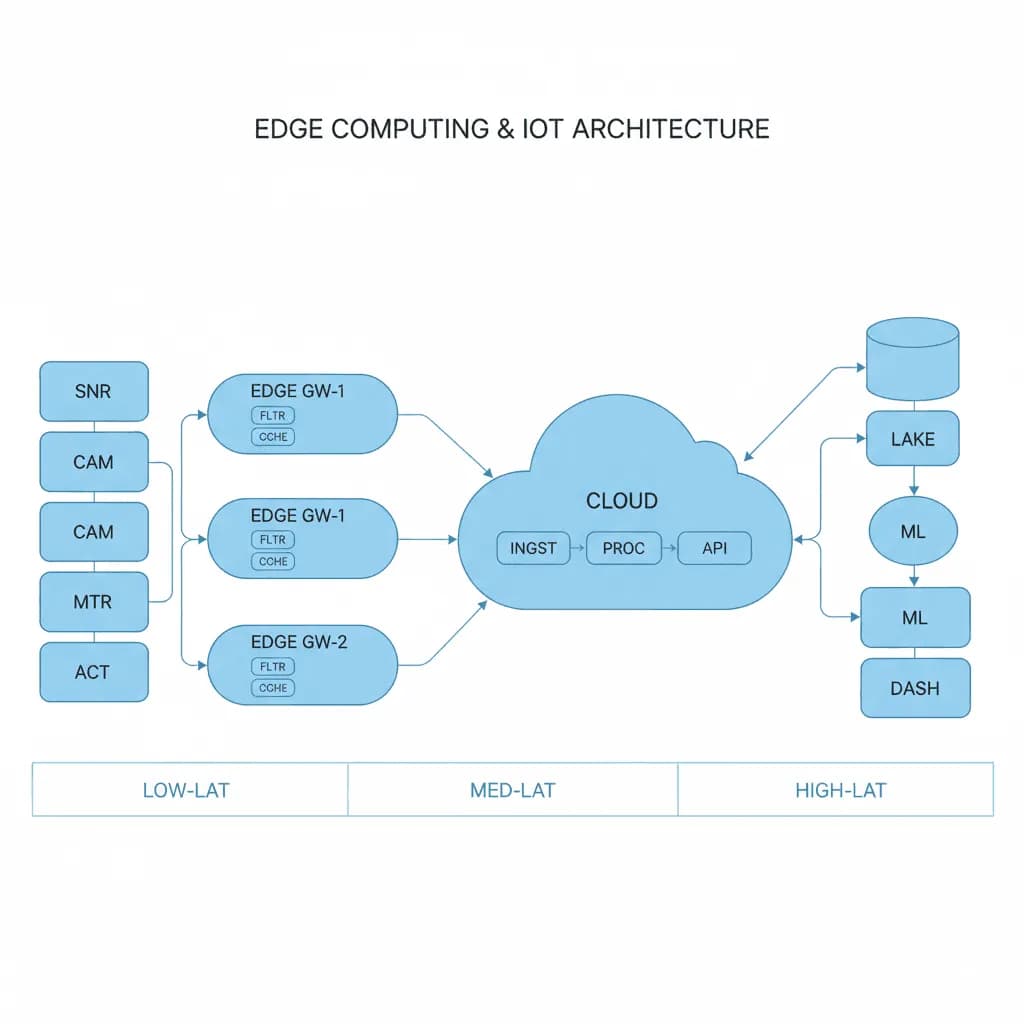
تواصل معناEdge-fog-cloud architecture distributes computation across three tiers. Edge devices collect sensor data and run lightweight inference (anomaly detection, threshold alerts). Fog nodes (on-premise gateways or local servers) aggregate data from multiple edge devices, run more complex models, and manage device fleets. Cloud services handle long-term storage, model training, fleet-wide analytics, and management dashboards. The architecture accounts for intermittent connectivity, device heterogeneity, over-the-air updates, and security at every tier.

Data flows upward through the tiers with intelligence at each layer. Edge devices publish sensor readings to fog nodes via MQTT or CoAP. Fog nodes run stream processing (Apache NiFi, AWS Greengrass, or custom) to filter, aggregate, and enrich data before forwarding to cloud. Cloud ingestion (Kinesis, IoT Core, or Event Hubs) routes data to time-series databases, data lakes, and ML training pipelines. Commands and OTA updates flow downward through the same path. A device shadow/twin system maintains the last-known state of every device for query and reconciliation.

System Architecture Overview
| Layer | Technologies |
|---|---|
| Edge Devices | ESP32, Raspberry Pi, Jetson Nano/Orin, STM32, custom PCBs |
| Protocols | MQTT (Mosquitto, EMQX), CoAP, Modbus, BACnet, LoRaWAN, BLE |
| Fog/Gateway | AWS Greengrass, Azure IoT Edge, Apache NiFi, Docker on industrial PCs |
| Cloud IoT | AWS IoT Core, Azure IoT Hub, GCP IoT, custom MQTT brokers |
| Data | InfluxDB, TimescaleDB, ClickHouse, S3/Parquet for cold storage |
| ML at Edge | TensorFlow Lite, ONNX Runtime, NVIDIA TensorRT (Jetson) |
| Use When | Avoid When |
|---|---|
| Devices generate high-volume data that's expensive to transmit entirely | All devices have reliable, low-latency cloud connectivity |
| Real-time decisions need < 100ms response (safety, control systems) | The workload is purely data collection with batch cloud processing |
| Devices must function during network outages | You have < 50 devices and can manage them individually |
| Privacy/compliance requires processing data locally before cloud transmission | The "edge" is actually a web browser — that's a different architecture |
MW designs IoT architectures with a "data gravity" lens — we map where each data type needs to be processed (edge, fog, or cloud) based on latency requirements, bandwidth costs, and decision granularity. We don't push everything to the cloud and filter later. Our edge deployments include automated device provisioning with certificate-based authentication, OTA update pipelines with staged rollouts and automatic rollback, and local dashboards on fog nodes for on-site operators who can't wait for cloud round-trips.
تستخدم MicrocosmWorks إطار عمل لاتخاذ القرار يستند إلى حساسية زمن الاستجابة (latency sensitivity)، وتكلفة النطاق الترددي (bandwidth cost)، ومتطلبات خصوصية البيانات لتقسيم أعباء العمل بين الحافة والسحابة. المهام الحيوية للوقت مثل اكتشاف الشذوذ (anomaly detection) في بيانات المستشعرات، وحلقات التحكم المحلية (local control loops)، وإيقافات الأمان (safety shutoffs) تعمل على الحافة، بينما يبقى تدريب النماذج والتحليلات التاريخية والتجميع عبر المواقع في السحابة. نساعد العملاء على ربط كل حالة استخدام IoT بمستوى الحوسبة الصحيح خلال مرحلة اكتشاف البنية لدينا.
تصمم MicrocosmWorks عُقد الحافة مع استمرارية محلية باستخدام قواعد بيانات خفيفة الوزن مثل SQLite أو TimescaleDB، بالإضافة إلى تخزين وإعادة توجيه البيانات (store-and-forward queuing) التي تقوم بتخزين البيانات مؤقتًا أثناء انقطاعات الاتصال ومزامنتها تلقائيًا عند استعادة الاتصال. يتضمن برنامج الحافة الثابت (edge firmware) لدينا منطق حل النزاعات للسيناريوهات التي تختلف فيها القرارات المحلية المتخذة دون اتصال عن حالة جانب السحابة. هذا يضمن عدم فقدان البيانات واستمرارية التشغيل حتى في البيئات ذات الاتصال المتقطع مثل المواقع الصناعية النائية أو الأساطيل المتنقلة.
تطبق MicrocosmWorks مسارات تحديث OTA (عبر الهواء) مع التوقيع التشفيري (cryptographic signing)، وعمليات النشر المرحلية (staged rollouts)، وقدرات التراجع التلقائي (automatic rollback) لضمان حصول كل جهاز طرفي على برنامج ثابت (firmware) موثوق به دون خطر التوقف عن العمل. نستخدم مصادقة TLS المتبادلة بين الأجهزة الطرفية وخادم التحديث، مع التمهيد الآمن المدعوم بالأجهزة (hardware-backed secure boot) لمنع تنفيذ البرامج الثابتة المتلاعب بها. تقوم استراتيجية النشر المرحلي لدينا بتحديث الأجهزة على دفعات صغيرة مع فحوصات صحية بين المراحل، بحيث لا يصل أي تحديث سيء إلى أسطولك بالكامل.
تختار MicrocosmWorks أجهزة الحافة بناءً على ملف تعريف عبء العمل (workload profile) — NVIDIA Jetson للرؤية الحاسوبية (computer vision) واستدلال ML، وبوابات متوافقة مع AWS IoT Greengrass للحوسبة الطرفية للأغراض العامة، وأجهزة كمبيوتر صناعية متينة من بائعين مثل Advantech لبيئات التصنيع القاسية. نحافظ على بنى مرجعية لكل منصة تتضمن مكدسات شبكات وأمن وقياس عن بعد (telemetry stacks) مهيأة مسبقًا، مما يسرع عملية النشر بنسبة 40-60%. يقوم فريقنا بتقييم استهلاك الطاقة، ونطاق درجة حرارة التشغيل، وخيارات الاتصال لتناسب ظروف موقعك المحددة.
أكملت MicrocosmWorks العديد من مشاريع تحديث SCADA حيث نركب بوابات حوسبة طرفية (edge computing gateways) تقوم بترجمة البروتوكولات القديمة مثل Modbus و OPC-UA إلى تدفقات MQTT أو gRPC حديثة دون تعطيل أنظمة التحكم الحالية. نقوم بتشغيل بنية موازية أثناء الترحيل بحيث يستمر نظام SCADA القديم في العمل بينما يتم التحقق من صحة خط أنابيب الحافة السحابية الجديد مقابل بيانات الإنتاج. تبدأ أسعارنا الاستشارية لتحديث IoT الصناعي من 20 إلى 50 دولارًا في الساعة اعتمادًا على تعقيد البروتوكول والمتطلبات التنظيمية المعنية.