Kickly: AI-drevet projektplatform for startups
Kickly er en AI-drevet projektstyringsplatform bygget til startups – der kombinerer smart opgaveautomatisering, teamsamarbejde og sporing af fremskridt i realtid i ét produkt.
Diskuter Dit Projekt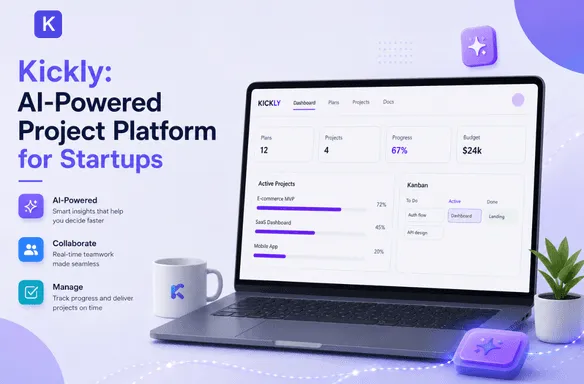
Udfordringen
Startup-teams spildte uger på planlægning og koordinering, før de skrev en eneste linje kode.
- AI-først planlægning: Generiske projektskabeloner virkede ikke. Systemet skulle generere roadmaps med faser, opgaver, tidslinjer og ressourceestimater skræddersyet til branche og teamstørrelse.
- Realtidssamarbejde: Flere medlemmer skulle kunne redigere tavler, tidslinjer og kanaler samtidigt uden konflikter eller tab af data.
- Servicekoordinering: AI-planlægning, opgavestyring, tidsregistrering, chat og fakturering skulle fungere sammen, samtidig med at de kunne skaleres uafhængigt.
- Synkronisering på tværs af platforme: Teams, der skiftede mellem desktop og web, forventede, at enhver handling øjeblikkeligt afspejledes på begge platforme.
- Kompleks fakturering: AI-kreditter, teampladser, lagergrænser og funktionsniveauer krævede automatiseret brugssporing og planstyring.
- AI-latens: Samtidig plangenerering og assistentforespørgsler skulle forblive hurtige, efterhånden som brugen steg.
Vores Løsning
Vi byggede Kickly som et distribueret system, hvor AI-planlægning, samarbejde, tidsregistrering og fakturering fungerer som uafhængige services. Hver service kan skaleres baseret på efterspørgsel uden at nedlægge hele platformen.
Arkitektur
- Frontend: React, Next.js, TypeScript
- Desktop: Electron for Windows and Mac
- Backend: Node.js, Express, Python, FastAPI
- AI Engine: OpenAI API
- Real-Time: WebSocket, Socket.io
- Database: PostgreSQL, Prisma, MongoDB, Redis
- Async Processing: Celery, RabbitMQ
- Billing: Stripe API
- Infrastructure: Docker, Kubernetes, AWS, Nginx
- Autentifikation: JWT-baseret autentifikation med rolle- og projektniveau-tilladelser
Nøglefunktioner
- AI-projektplanlægning: Omdanner startup-idéer til projektplaner med faser, opgaver, tidslinjer og ressourceestimater.
- Smart opgavestyring: Brugerdefinerede workflows, tavler, afhængigheder, ejere og fremskridtssporing.
- Indbygget tidsregistrering: Registrerer tid brugt på opgaver og giver indsigt i ressourceallokering.
- Teamchat og kanaler: Projektbaserede kanaler for beskeder, filer og opgavediskussioner.
- Desktop- og web-paritet: Holder projekter, opgaver, beskeder og tidsregistreringer synkroniseret.
- AI-assistentintegration: Giver kontekstbevidste svar ved hjælp af projektplaner, fremskridt, og teamaktivitet.
- Abonnementsstyring: Administrerer automatisk AI-kreditter, lagerplads, pladser, opgraderinger, nedgraderinger og overforbrug.
- Aktivitetsfeeds: Viver opgaver, beskeder, registreret tid og projektopdateringer i én tidslinje.
- API-adgang: REST API'er til integrationer med løn- og eksterne projektstyringssystemer.
- Sikkerhed og tilladelser: Rollebaseret adgangskontrol med data krypteret under transmission og i hvile.
Resultater
Teknologistak
caseStudyDetail.more Casestudier
Udforsk flere af vores tekniske implementeringer
Catant HR- og personaleadministrationsplatform
Catant er en modulær HR- og personaleadministrationsplatform, der hjælper virksomheder med at administrere medarbejdere, løn, fremmøde og overholdelse af regler fra ét samlet dashboard.
AI-drevet fakturabehandling med OCR og QuickBooks-integration
En mellemstor virksomhed, der månedligt behandler hundredvis af leverandørfakturaer, havde brug for at eliminere manuel dataindtastning ved automatisk at udtrække fakturadata ved hjælp af AI/OCR og synkronisere dem direkte til QuickBooks for bogføring og sporing af betalinger.
Ofte stillede spørgsmål
Kickly uses AI to turn a plain-language startup idea into an actionable project plan with structured phases, tasks, timelines, and resource estimates tailored to the project’s industry and team size.
Kickly uses WebSockets and Socket.io to synchronize tasks, messages, time entries, and project updates in real time, allowing team members to collaborate without manually refreshing or reconciling changes.
Kickly uses a shared backend and real-time communication layer to maintain synchronization between its desktop and web applications. Changes to projects, tasks, messages, and time entries are propagated across platforms so teams can switch devices without losing context.
Kickly separates AI workloads from its core application services using dedicated Python/FastAPI services. Celery and RabbitMQ handle AI generation and background jobs asynchronously, allowing resource-intensive workloads to scale independently as demand increases.
Kickly was built using React, Next.js, TypeScript, Electron, Node.js, Python/FastAPI, PostgreSQL, MongoDB, Redis, Socket.io, OpenAI API, Stripe API, Kubernetes, and AWS. This technology stack supports AI-powered planning, real-time collaboration, cross-platform applications, billing, and scalable backend infrastructure.
Klar til at Transformere Din Virksomhed?
Lad os drøfte, hvordan vi kan anvende lignende løsninger til dine udfordringer.