
Container Görüntülerini Yönetmek ve Dağıtmak için AWS ECR'yi Nasıl Kullanıyoruz
Modern uygulamalar, ortamlar arasında tutarlılık, taşınabilirlik ve basitleştirilmiş dağıtımlar sağlayan konteynerler kullanılarak giderek daha fazla geliştirilmektedir.
Video işleme platformumuz büyüdükçe, altyapımızda container görüntülerini depolamak, yönetmek ve dağıtmak için güvenilir bir yola ihtiyacımız oldu. Bu sorunu çözmek için **Amazon Web Services Elastic Container Registry (ECR)**'yi benimsedik.
Bu blog yazısında, AWS ECR'nin ne olduğunu, dağıtım iş akışımızda neden önemli bir rol oynadığını ve güvenilir ve verimli yayınları sürdürmemize nasıl yardımcı olduğunu inceleyeceğiz.
AWS ECR Nedir?
AWS Elastic Container Registry (ECR), tam olarak yönetilen bir container görüntü kayıt defteridir.
Ekiplerin şunları yapmasına olanak tanır:
- Docker görüntülerini güvenli bir şekilde depolamak
- Görüntü sürümlerini yönetmek
- Görüntüleri ortamlar arasında paylaşmak
- Dağıtım işlem hatlarıyla entegre olmak
- AWS güvenlik politikaları aracılığıyla erişimi kontrol etmek
ECR'yi, container görüntülerinin üretim ortamlarına dağıtılmadan önce depolandığı merkezi bir depo olarak düşünebilirsiniz.
Container Görüntü Yönetimi Neden Önemli?
Her dağıtım bir container görüntüsüyle başlar.
Bu görüntüler şunları içerir:
- Uygulama kodu
- Bağımlılıklar
- Çalışma zamanı yapılandırmaları
- Sistem kütüphaneleri
- İşleme araçları
Merkezi bir kayıt defteri olmadan, ortamlar arası dağıtımları yönetmek zorlaşır ve hataya açık hale gelir.
Bir container kayıt defteri, her ortamın tamamen aynı uygulama sürümünü çalıştırdığından emin olur.
Neden AWS ECR'yi Seçtik?
Sorunsuz AWS Entegrasyonu
Altyapımız AWS üzerine kurulu olduğundan, ECR dağıtım iş akışlarımızla doğal olarak entegre olur.
Bu bize şunları yapma olanağı sağlar:
- Görüntüleri doğrudan CI/CD işlem hatlarından göndermek
- Görüntüleri ECS iş yüklerine dağıtmak
- AWS IAM kullanarak izinleri yönetmek
- Altyapı operasyonlarını basitleştirmek
Güvenli Görüntü Depolama
Güvenlik, üretim iş yükleri için kritik öneme sahiptir.
ECR şunları sağlar:
- Özel depolar
- Erişim kontrolleri
- Şifreleme
- Güvenli görüntü dağıtımı
Bu, yalnızca yetkili sistemlerin dağıtım yapıtlarına erişebilmesini sağlamaya yardımcı olur.
Sürüm Kontrolü ve Geri Almalar
ECR'ye gönderilen her görüntü sürümlendirilebilir ve izlenebilir.
Bu bize şunları yapma olanağı sağlar:
- Belirli uygulama sürümlerini dağıtmak
- Yeni yayınları güvenli bir şekilde test etmek
- Gerektiğinde hızlıca geri almak
- Dağıtım tutarlılığını sürdürmek
Operasyonel Basitlik
Kendi kendine barındırılan bir container kayıt defterini yönetmek, bakım, izleme ve güvenlik yönetimi gerektirir.
ECR, tam olarak yönetilen bir çözüm sağlayarak bu ek yükü ortadan kaldırır.
Bu, ekibimizin altyapıyı sürdürmek yerine ürünler geliştirmeye odaklanmasını sağlar.
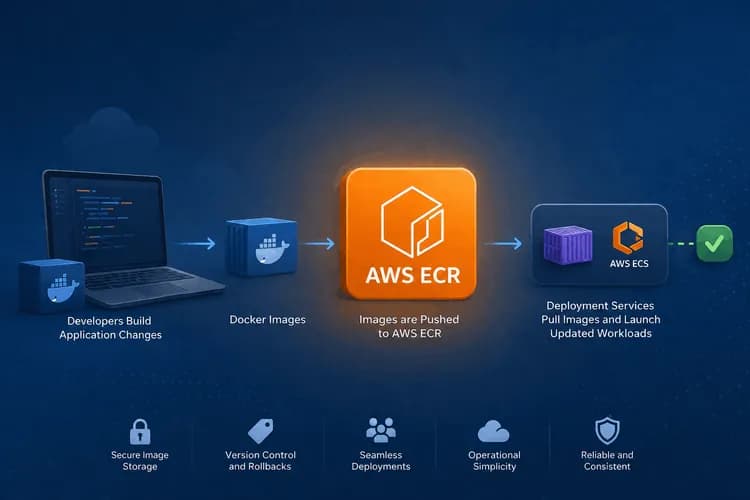
AWS ECR'yi Nasıl Kullanıyoruz?
Dağıtım iş akışımız basit bir süreci takip eder:
- Geliştiriciler uygulama değişiklikleri yapar.
- Docker görüntüleri oluşturulur.
- Görüntüler AWS ECR'ye gönderilir.
- Dağıtım hizmetleri görüntüleri ECR'den çeker.
- Güncellenmiş iş yükleri otomatik olarak başlatılır.
Bu iş akışı, güvenilir ve tekrarlanabilir dağıtımlar sağlar.
Platformumuz İçin Faydaları
AWS ECR'den faydalanarak şunları elde ederiz:
- Merkezi görüntü yönetimi
- Tutarlı dağıtımlar
- Daha hızlı yayın döngüleri
- Basitleştirilmiş operasyonlar
- Geliştirilmiş güvenlik
- Güvenilir sürüm kontrolü
Sonuç
AWS ECR, container dağıtım iş akışımızın temelini oluşturur. Güvenli ve ölçeklenebilir bir görüntü kayıt defteri sağlayarak, altyapımız genelinde tutarlı dağıtımları sürdürmemize ve uygulama teslimatını kolaylaştırmamıza yardımcı olur.