Kickly: AIを活用したスタートアップ向けプロジェクトプラットフォーム
Kicklyは、AIを活用したスタートアップ向けプロジェクト管理プラットフォームです。スマートなタスク自動化、チームコラボレーション、リアルタイムの進捗追跡を一つの製品に統合しています。
プロジェクトを相談する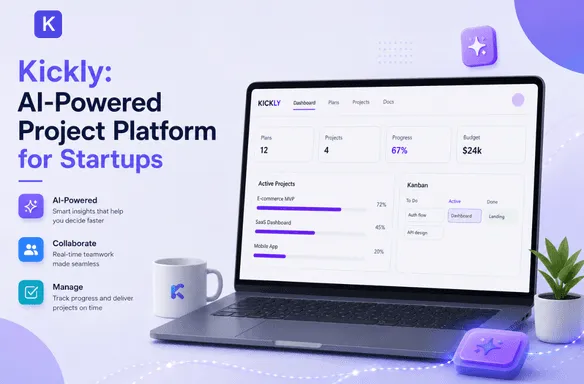
課題
スタートアップチームは、コードを一行も書く前に、計画と調整のオーバーヘッドに何週間も費やしていました。
- AI優先の計画立案: 一般的なプロジェクトテンプレートでは機能しませんでした。システムは、業界やチーム規模に合わせて、フェーズ、タスク、タイムライン、リソース見積もりを含むロードマップを生成する必要がありました。
- リアルタイムコラボレーション: 複数のメンバーが、競合やデータ損失なしに、ボード、タイムライン、チャネルを同時に編集できる必要がありました。
- サービス連携: AI計画、タスク管理、時間追跡、チャット、および請求が、個別にスケーリングしながら連携して機能する必要がありました。
- クロスプラットフォーム同期: デスクトップとウェブを切り替えるチームは、すべての操作が両方のプラットフォームで即座に反映されることを期待していました。
- 複雑な請求処理: AI credits、team seats、storage limits、およびfeature tiersには、自動化された使用状況追跡とプラン管理が必要でした。
- AIレイテンシ: 使用量の増加に伴い、同時計画生成とアシスタントクエリの速度を維持する必要がありました。
私たちのソリューション
私たちはKicklyを、AI計画、コラボレーション、時間追跡、請求が独立したサービスとして機能する分散システムとして構築しました。各サービスは、プラットフォーム全体を停止させることなく、需要に応じてスケーリングできます。
アーキテクチャ
- フロントエンド: React, Next.js, TypeScript
- デスクトップ: WindowsおよびMac向けElectron
- バックエンド: Node.js, Express, Python, FastAPI
- AIエンジン: OpenAI API
- リアルタイム: WebSocket, Socket.io
- データベース: PostgreSQL, Prisma, MongoDB, Redis
- 非同期処理: Celery, RabbitMQ
- 請求: Stripe API
- インフラストラクチャ: Docker, Kubernetes, AWS, Nginx
- 認証: ロールおよびプロジェクトレベルの権限を持つJWTベースの認証
主な機能
- AIプロジェクト計画: スタートアップのアイデアを、フェーズ、タスク、タイムライン、リソース見積もりを含むプロジェクト計画に変換します。
- スマートなタスク管理: カスタムワークフロー、ボード、依存関係、担当者、進捗追跡。
- 内蔵の時間追跡: タスクに費やされた時間を追跡し、リソース配分の洞察を提供します。
- チームチャットとチャネル: メッセージ、ファイル、タスクの議論のためのプロジェクトベースのチャネル。
- デスクトップとウェブの連携: プロジェクト、タスク、メッセージ、時間入力が同期された状態を維持します。
- AIアシスタント連携: プロジェクト計画、進捗、チーム活動を使用して、コンテキストに応じた回答を提供します。
- サブスクリプション管理: AI credits、ストレージ、seats、アップグレード、ダウングレード、および超過分を自動的に管理します。
- アクティビティフィード: タスク、メッセージ、記録された時間、プロジェクトの更新を一つのタイムラインに表示します。
- APIアクセス: 給与計算や外部のプロジェクト管理システムとの連携のためのREST API。
- セキュリティと権限: 転送中および保存時に暗号化されたデータを持つロールベースのアクセス制御。
成果
技術スタック
caseStudyDetail.more ケーススタディ
その他の技術実装事例をご覧ください
Catant HR & ワークフォース管理プラットフォーム
Catantは、企業が従業員、給与計算、勤怠、およびコンプライアンスを単一のダッシュボードから管理できるよう支援する、モジュラー型のHRおよびワークフォース管理プラットフォームです。
Kickly: AIを活用したスタートアップ向けプロジェクトプラットフォーム
Kicklyは、AIを活用したスタートアップ向けプロジェクト管理プラットフォームです。スマートなタスク自動化、チームコラボレーション、リアルタイムの進捗追跡を一つの製品に統合しています。
よくある質問
Kickly uses AI to turn a plain-language startup idea into an actionable project plan with structured phases, tasks, timelines, and resource estimates tailored to the project’s industry and team size.
Kickly uses WebSockets and Socket.io to synchronize tasks, messages, time entries, and project updates in real time, allowing team members to collaborate without manually refreshing or reconciling changes.
Kickly uses a shared backend and real-time communication layer to maintain synchronization between its desktop and web applications. Changes to projects, tasks, messages, and time entries are propagated across platforms so teams can switch devices without losing context.
Kickly separates AI workloads from its core application services using dedicated Python/FastAPI services. Celery and RabbitMQ handle AI generation and background jobs asynchronously, allowing resource-intensive workloads to scale independently as demand increases.
Kickly was built using React, Next.js, TypeScript, Electron, Node.js, Python/FastAPI, PostgreSQL, MongoDB, Redis, Socket.io, OpenAI API, Stripe API, Kubernetes, and AWS. This technology stack supports AI-powered planning, real-time collaboration, cross-platform applications, billing, and scalable backend infrastructure.