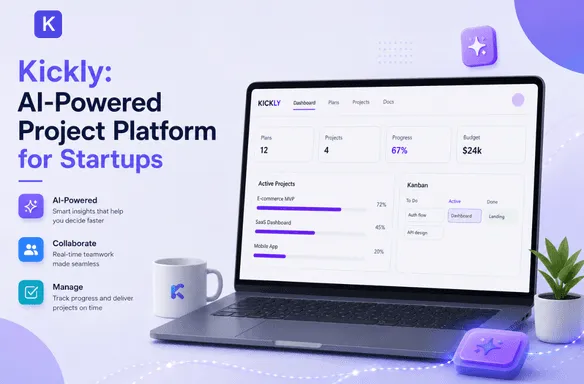
挑战
初创企业团队在编写一行代码之前,会花费数周时间进行规划和协调,造成大量开销。
- AI 优先规划: 通用项目模板不再适用。系统需要根据行业和团队规模,生成包含阶段、任务、时间表和资源估算的路线图。
- 实时协作: 多名成员需要同时编辑看板、时间线和频道,且不发生冲突或数据丢失。
- 服务协调: AI 规划、任务管理、时间跟踪、聊天和计费需要协同工作,同时又能独立扩展。
- 跨平台同步: 团队在桌面端和网页端之间切换时,期望所有操作都能在两个平台即时反映。
- 复杂计费: AI 积分、团队席位、存储限制和功能层级需要自动化的使用情况跟踪和套餐管理。
- AI 延迟: 随着使用量的增加,并发计划生成和助手查询需要保持快速响应。
我们的解决方案
我们将 Kickly 构建为一个分布式系统,其中 AI 规划、协作、时间跟踪和计费作为独立服务运行。每个服务都可以根据需求进行扩展,而不会导致整个平台停机。
架构
- 前端: React, Next.js, TypeScript
- 桌面端:: 适用于 Windows 和 Mac 的 Electron
- 后端: Node.js, Express, Python, FastAPI
- AI 引擎:: OpenAI API
- 实时通信:: WebSocket, Socket.io
- 数据库:: PostgreSQL, Prisma, MongoDB, Redis
- 异步处理:: Celery, RabbitMQ
- 计费:: Stripe API
- 基础设施:: Docker, Kubernetes, AWS, Nginx
- 认证:: 基于 JWT 的认证,具有角色和项目级别的权限
主要功能
- AI 项目规划: 将初创企业构想转化为包含阶段、任务、时间表和资源估算的项目计划。
- 智能任务管理: 自定义工作流、看板、依赖项、负责人和进度跟踪。
- 内置时间跟踪:: 跟踪任务耗时并提供资源分配洞察。
- 团队聊天与频道:: 基于项目的频道,用于消息、文件和任务讨论。
- 桌面端与网页端同步:: 保持项目、任务、消息和时间记录的同步。
- AI 助手集成:: 利用项目计划、进度和团队活动提供上下文感知的答案。
- 订阅管理:: 自动管理 AI 积分、存储空间、席位、升级、降级和超额使用。
- 活动动态:: 在一个时间线中显示任务、消息、记录的时间和项目更新。
- API 访问:: 用于与薪资和外部项目管理系统集成的 REST API。
- 安全与权限:: 基于角色的访问控制,数据在传输和存储时均进行加密。
成果
技术栈
常见问题
Kickly uses AI to turn a plain-language startup idea into an actionable project plan with structured phases, tasks, timelines, and resource estimates tailored to the project’s industry and team size.
Kickly uses WebSockets and Socket.io to synchronize tasks, messages, time entries, and project updates in real time, allowing team members to collaborate without manually refreshing or reconciling changes.
Kickly uses a shared backend and real-time communication layer to maintain synchronization between its desktop and web applications. Changes to projects, tasks, messages, and time entries are propagated across platforms so teams can switch devices without losing context.
Kickly separates AI workloads from its core application services using dedicated Python/FastAPI services. Celery and RabbitMQ handle AI generation and background jobs asynchronously, allowing resource-intensive workloads to scale independently as demand increases.
Kickly was built using React, Next.js, TypeScript, Electron, Node.js, Python/FastAPI, PostgreSQL, MongoDB, Redis, Socket.io, OpenAI API, Stripe API, Kubernetes, and AWS. This technology stack supports AI-powered planning, real-time collaboration, cross-platform applications, billing, and scalable backend infrastructure.