MicrocosmWorksDijital Kozmosu Yenilikçi ve Mimari Olarak Tasarlamak
Hakkındaİletişim
MicrocosmWorksDijital Kozmosu Yenilikçi ve Mimari Olarak İnşa Etmek

Önemli BT çözümleri sunuyoruz. Teknoloji, güvenlik ve işletmelerin güvenilir, yenilikçi BT altyapısı ile büyümesine yardımcı olmaktan tutkuluyuz.

[email protected]
+91 7011868196
New Delhi, India

AI Büyüme Merkezi

AI MerkeziStartup İnovasyonuKurumsal Hızlandırıcı

Çözümler

Tüm ÇözümlerSağlık ve Fitness UygulamalarıAI Video PlatformuAI Ajan Geliştirme

Kaynaklar

ÖngörülerSektör RehberleriKullanım Durumu ŞablonlarıMimari KalıplarVaka Çalışmaları

Şirket

HakkımızdaİletişimÇalışmalarımız

Hizmetler

Dijital DanışmanlıkBulut AltyapısıSaaS GeliştirmeYapay Zeka GeliştirmeVideo Teknolojisi
ERP GeliştirmeZoho ÖzelleştirmeOdoo GeliştirmeSalesforce EntegrasyonuÖzel CRM Geliştirme
QuickBooks EntegrasyonuIoT ÇözümleriBlokzincir Geliştirme
Siber Güvenlik DanışmanlığıIT Desteği - L3

© 2026 MicrocosmWorks. Tüm hakları saklıdır.

Gizlilik PolitikasıHizmet Şartları
Mimari Desenlere Geri Dön

InfrastructureEnterprise

Cloud-Native Infrastructure

Infrastructure that's versioned, tested, and deployed like application code — because your platform is only as reliable as what's underneath it.

June 18, 2026
|
2 topics covered
Bu Mimariyi Tartışın
cloud-native-infrastructure.webp
Infrastructure
Category
Enterprise
Complexity
Enterprise SaaS, Financial Services
Industries
2+
Technologies

When You Need This

Your infrastructure is managed by clicking through cloud consoles. Environment drift between staging and production causes "works on my machine" issues at the infrastructure level. Scaling requires manual intervention, deployments involve SSH-ing into servers, and disaster recovery is a Google Doc that nobody has tested. You need infrastructure that's reproducible, version-controlled, self-healing, and observable — infrastructure that a team can operate without hero knowledge.

Related Architecture Patterns

Explore more design patterns and system architectures

security-first-architecture.webp
Infrastructure

Önce Güvenlik Mimarisi

Güvenlik, lansmandan sonra eklediğiniz bir özellik değildir. O, mimari bir özelliktir — sistem ya bunun için tasarlanmıştır ya da tasarlanmamıştır.

EnterpriseView
serverless-first-architecture.webp

Bu Mimarinin Uygulanmasında Yardıma İhtiyacınız Var mı?

Mimarlarımız, bu deseni kullanarak belirli gereksinimleriniz için sistemler tasarlamanıza ve oluşturmanıza yardımcı olabilir.

İletişime Geçin


Pattern Overview

Cloud-native infrastructure treats infrastructure as code (IaC), runs workloads in containers orchestrated by Kubernetes (or managed equivalents), deploys through GitOps pipelines, and uses managed services where the operational trade-off is favorable. The pattern covers multi-region deployment for availability, horizontal pod autoscaling for elasticity, service mesh for inter-service communication, and comprehensive observability. The goal isn't "running on cloud" — it's building infrastructure that's automated, reproducible, and resilient by default.

Reference Architecture

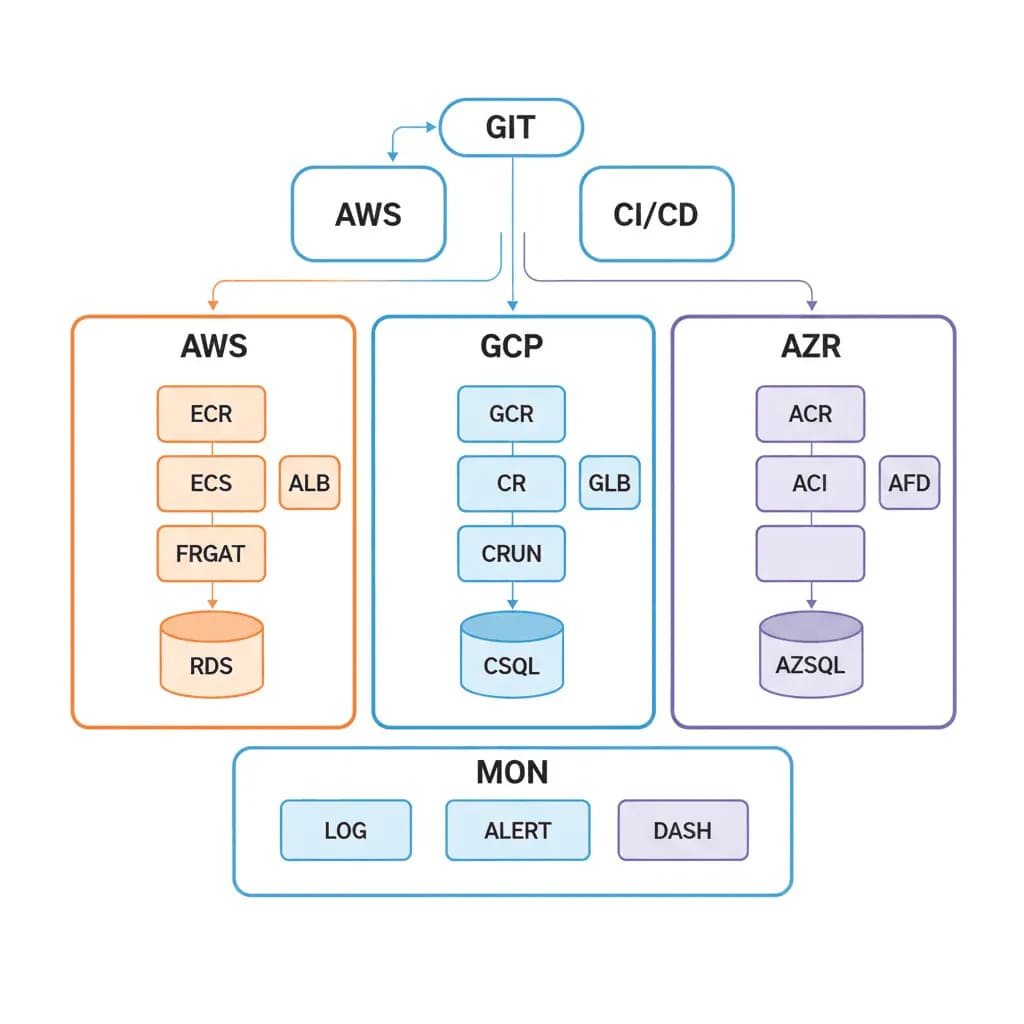
The architecture spans three planes. The control plane manages infrastructure provisioning through Terraform/Pulumi, runs GitOps controllers (ArgoCD/Flux), and handles secrets management (Vault/AWS Secrets Manager). The workload plane runs application containers in Kubernetes clusters (EKS, GKE, or AKS) with pod autoscaling, service mesh (Istio/Linkerd), and ingress management. The observability plane collects metrics (Prometheus), logs (Loki/CloudWatch), traces (Jaeger/Datadog), and alerts (PagerDuty/OpsGenie).

Core Components
  • IaC Foundation: Terraform or Pulumi modules that define every resource — VPCs, subnets, security groups, IAM roles, databases, caches, queues. Modularized by concern (networking, compute, data, observability) with environment-specific variable files
  • Kubernetes Cluster: Multi-AZ deployment with node pools sized for workload types (general, compute-optimized, GPU). Namespace-per-environment or namespace-per-team isolation. Pod disruption budgets, resource quotas, and network policies
  • GitOps Pipeline: ArgoCD or Flux watches a Git repository for manifests. Application deployments are pull requests — reviewed, approved, and automatically synced. Rollback is a git revert
  • Observability Stack: Prometheus + Grafana for metrics, Loki or ELK for logs, Jaeger or Datadog for distributed tracing. SLO-based alerting that pages on customer impact, not resource utilization

Design Decisions & Trade-offs

EKS vs. GKE vs. AKS
MW picks the platform that fits the existing cloud footprint. GKE has the best Kubernetes experience (Autopilot is genuinely hands-off). EKS is the pragmatic choice for AWS-heavy organizations. AKS for Azure shops. We don't recommend multi-cloud Kubernetes unless there's a genuine business requirement (regulatory, vendor risk). The operational overhead of managing clusters across clouds rarely justifies the flexibility.
Terraform vs. Pulumi
Terraform for teams that want a large ecosystem, mature providers, and HCL's declarative model. Pulumi for teams that prefer programming languages (TypeScript, Python) over DSLs. MW uses both — Terraform for shared infrastructure modules, Pulumi when complex logic (conditional resources, loops, API calls during provisioning) makes HCL unwieldy.
Managed Services vs. Self-Hosted
MW defaults to managed services (RDS over self-hosted PostgreSQL, MSK over self-hosted Kafka, ElastiCache over self-hosted Redis) unless: (a) the managed service has a hard limitation you'll hit, (b) the cost at your scale makes self-hosted economical (typically >$50K/month on managed), or (c) regulatory requirements demand it. The ops burden of self-hosting is almost always underestimated.
Service Mesh: Yes or No
A service mesh (Istio, Linkerd) adds mTLS, traffic management, and observability between services — but also adds latency, complexity, and another thing to debug. MW recommends a service mesh when you have >10 services, need mutual TLS for compliance, or want canary deployments at the network level. For smaller systems, application-level retries and circuit breakers (via libraries) are simpler.
Cloud-Native Infrastructure - System Architecture Diagram

System Architecture Overview

Technology Choices

LayerTechnologies
ComputeKubernetes (EKS, GKE, AKS), ECS Fargate, Cloud Run
IaCTerraform, Pulumi, AWS CDK
GitOpsArgoCD, Flux, GitHub Actions
NetworkingIstio, Linkerd, AWS App Mesh, Nginx Ingress, Cert-Manager
ObservabilityPrometheus, Grafana, Datadog, Loki, Jaeger, PagerDuty

When to Use / When to Avoid

Use WhenAvoid When
Running 5+ services that need independent scaling and deploymentYou have a single application that can run on a PaaS (Vercel, Railway, Render)
Multiple teams contribute to shared infrastructureYour team is < 3 engineers — Kubernetes operational burden will dominate
You need multi-region deployment for availability or complianceThe project is an MVP that doesn't need HA or complex orchestration
Compliance requires reproducible, auditable infrastructureCost optimization is critical and the workload fits serverless economics

Our Approach

MW delivers infrastructure as a product, not a one-time setup. We provide Terraform modules with CI/CD pipelines that plan, review, and apply infrastructure changes through pull requests — the same workflow your developers use for application code. Our Kubernetes deployments include production-grade defaults: pod disruption budgets, resource limits, network policies, and automated certificate rotation. We hand off with operational runbooks, Grafana dashboards, and on-call escalation policies so your team can operate the infrastructure independently.

Related Blueprints

  • Cloud Migration & Cost Optimization — Migrating from on-prem or legacy cloud to cloud-native
  • Multi-Region High-Availability Architecture — Active-active and active-passive multi-region patterns
  • CI/CD Pipeline Modernization — GitOps pipeline design and implementation
  • Hybrid Cloud for Regulated Industries — Cloud-native patterns with on-prem compliance constraints
  • GPU Cluster Orchestration for AI Workloads — Kubernetes with GPU node pools for ML training

Related Case Studies

  • GPU Infrastructure — RunPod and custom GPU cluster orchestration for AI workloads
  • Video Encoding Platform — Containerized encoding pipelines with autoscaling
Related Technologies
Cloud SolutionsDigital Consulting
Infrastructure

Sunucusuz Odaklı Mimari

Kullandığınız kadar ödeyin, kullanmadığınızda sıfıra ölçeklendirin ve sunucuları tamamen yönetmeyi bırakın — ancak ekonominin ne zaman işlemeyi durduracağını bilin.

AdvancedView
on-off-scaling-architecture.webp
Infrastructure

Açma/Kapama Ölçekleme Mimarisi

Boşta duran GPU'lar için ödeme yapmayın. Hesaplama kaynaklarını tam zamanında sağlayın, iş yükünü işleyin ve ardından kaldırın — sermaye harcamasını iş başına bir işletme maliyetine dönüştürün.

AdvancedView

Sıkça Sorulan Sorular

Cloud-native means designing applications specifically to exploit cloud capabilities like elastic scaling, managed services, and distributed architecture, rather than simply lifting on-premises applications into virtual machines in the cloud. MicrocosmWorks builds cloud-native systems using containerization, declarative infrastructure-as-code, service meshes, and CI/CD automation that treat infrastructure as ephemeral and replaceable rather than precious and long-lived. The practical difference is that a cloud-native application can scale from 10 to 10,000 users automatically, recover from infrastructure failures without human intervention, and deploy updates dozens of times per day.

MicrocosmWorks recommends Kubernetes for organizations running 10+ microservices that need advanced orchestration features like auto-scaling, rolling deployments, service discovery, and multi-environment consistency, while simpler platforms like AWS ECS, Google Cloud Run, or Azure Container Apps are better for teams with fewer services or limited Kubernetes expertise. We have seen many teams adopt Kubernetes prematurely and spend more time managing the cluster than building features, so we evaluate your actual workload complexity and team maturity before recommending the orchestration layer. Our assessment includes a TCO analysis comparing managed Kubernetes, serverless containers, and platform-as-a-service options for your specific scale.

MicrocosmWorks standardizes on Terraform for multi-cloud infrastructure provisioning and Pulumi for teams that prefer using programming languages like TypeScript or Python instead of HCL, with all infrastructure definitions stored in Git and deployed through the same CI/CD pipeline as application code. We structure IaC repositories into reusable modules for networking, compute, databases, and observability that can be composed into environment-specific configurations, ensuring consistency between development, staging, and production. Every infrastructure change goes through pull request review with automated plan previews that show exactly what resources will be created, modified, or destroyed before any change is applied.

MicrocosmWorks designs cloud-native architectures with an abstraction layer that isolates cloud-specific dependencies behind well-defined interfaces, making it possible to swap providers for individual services without rewriting the entire application. We use portable technologies like Kubernetes, PostgreSQL, Redis, and OpenTelemetry wherever possible, and wrap cloud-specific services like DynamoDB or Cloud Spanner in adapter layers that can be reimplemented for alternative providers. This approach adds minimal overhead during initial development but saves months of migration effort if you later need to move workloads to a different provider or adopt a multi-cloud strategy for compliance or resilience reasons.

A typical cloud-native infrastructure engagement begins with a 2-week assessment where MicrocosmWorks evaluates your current architecture, workloads, and team capabilities, followed by a 4-8 week platform build that delivers the foundational infrastructure including container orchestration, CI/CD pipelines, observability, and security controls. We then run a 4-6 week application migration phase where we containerize and deploy your first 2-3 services onto the new platform with your engineering team embedded alongside ours for hands-on knowledge transfer. Our cloud-native consulting rates range from $10-$40/hr, and the full engagement from assessment through production readiness typically spans 10-16 weeks.